 Prairie Dumpster Rental
Contractor & Commercial Accounts Phoenix
A contractor account is a standing arrangement, not a one-off rental: a builder sets one point of contact and one standard bin size, then calls to swap full for empty as each phase of the job wraps. This is different…
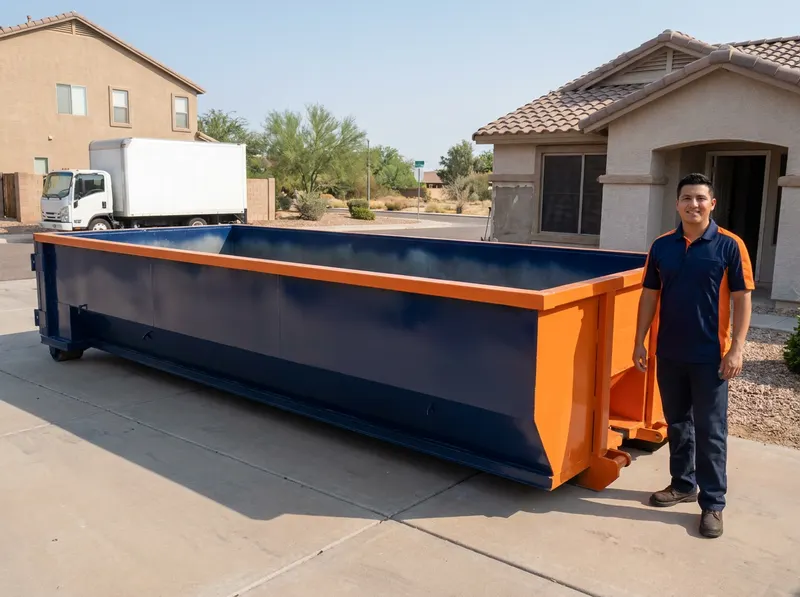
- What's included: flat all-in delivery, pickup, and disposal on every bin, no per-ton weight fees and no fuel surcharge, so the price you're quoted is the price you pay.
- How fast: bins can drop on active Phoenix jobsites in Arcadia, Desert Ridge, and Maryvale with same-day or next-morning availability when scheduled early; Sundays are the exception.
- What it costs: 10-yard $595, 15-yard $650, 20-yard $695, 30-yard $795, 40-yard $895, flat, the $595 minimum applies to every account bin.
- What we take: construction debris, roofing, drywall, framing lumber, concrete (heavy-load sizes), demo waste, and general jobsite junk; no hazardous materials, wet paint, or tires.
- How to book: call (928) 267-0288 to open a contractor account, set your standard size, and schedule swaps by phone as each phase finishes.
A contractor account is a standing arrangement, not a one-off rental: a builder sets one point of contact and one standard bin size, then calls to swap full for empty as each phase of the job wraps. This is different from junk removal, the crew loads the bin, and the driver hauls it. For repeat work across Maricopa County, the account keeps the paperwork and pricing identical from the first drop to the last, so a project manager running three sites in Ahwatukee Foothills, Sunnyslope, and North Mountain sees the same five flat numbers on every bin.
Size the bin to the trade. A 10-yard holds roughly 4 pickup loads and fits a single-bathroom gut or a small tile tear-out on a tight Willo Historic District lot where driveway room is scarce. A 20-yard, near 8 pickup loads, suits a whole-house remodel or a kitchen-and-flooring job. A 30-yard fits a roof tear-off or new-construction framing scrap, and the 40-yard handles large commercial cleanouts and multi-unit turnovers in Laveen or Encanto-Palmcroft. The trade-off is footprint versus volume: the 40-yard swallows the most debris but needs a long, clear stretch of driveway or lot, while the 10-yard tucks into a narrow alley or a compact Desert Ridge site.
Weight is where jobsite pricing usually goes sideways, the flat account price already includes disposal, so there is no per-ton bill after the fact. One planning note for the heavy trades: concrete, brick, tile, and dirt are dense, so those clean loads belong in the smaller 10-yard or 15-yard bins rather than a stacked 30-yard, both for road-legal weight and for a low placement on tight ground. Roofers, framers, and drywall crews can run the bigger boxes because their debris is bulky, not dense.
Placement matters on an active site. Drivers set bins on the driveway, a graded pad, or the street where allowed; Phoenix and Maricopa County right-of-way placements can require a permit, so confirm the spot when the account is opened. Swap timing is set by phone: call as the demo phase finishes, and the empty replaces the full so the crew never stops for a debris pileup. Right-sized bins, flat price, fast, that is the whole account.
Contractor & Commercial Accounts cost in Phoenix
Every job gets a firm, written price after a free on-site visit.
Common questions
Do contractor accounts in Phoenix get a lower price than a single rental?
Can you deliver dumpsters to active jobsites across Phoenix?
Which dumpster size should a Phoenix contractor put on a roof tear-off?
Are there surprise weight or overage fees on Phoenix commercial accounts?
Do contractors need a permit to place a dumpster in Phoenix?
Get started today
Tell us about your contractor & commercial accounts job in Phoenix and we'll send a clear, written quote, usually the same day.